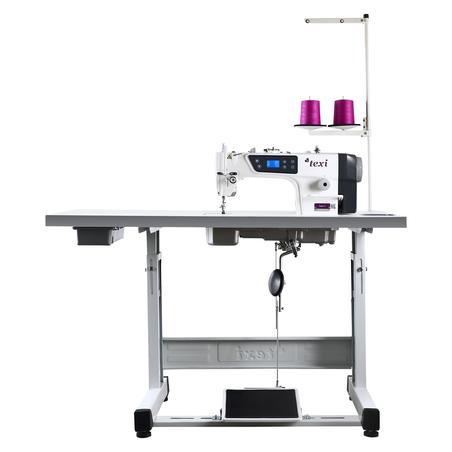
Proper sewing machine setup – how to achieve the perfect stitch
Proper sewing machine setup
Proper sewing machine setup is essential for achieving high-quality stitches and smooth operation. Whether you are using a domestic or industrial sewing machine, correctly adjusting key parameters helps prevent common issues such as thread breakage, skipped stitches, or uneven fabric feeding.
In this guide, we explain how to set up a sewing machine step by step, focusing on the needle, threading, thread tension, and hook timing.
How to set up a sewing machine – key elements
For a sewing machine to operate correctly, all its essential components must be properly selected and adjusted. It is best to start with a basic inspection:
Needle Selection and Installation
The sewing machine needleshould be matched to both the fabric type and thread. An incorrect needle choice or improper installation can result in:
skipped stitches,
fabric damage,
thread breakage.
Make sure the needle is straight, undamaged, and installed according to the manufacturer’s guidelines.
Correct Upper Threading
The upper thread must pass through all guides and tension elements correctly. Even a small mistake in threading can significantly affect stitch quality.
It is also important to:
regularly clean the machine from dust and thread residues,
check the condition of tension discs,
use high-quality thread.
Bobbin Thread Setup
The bobbin thread should be evenly wound and correctly inserted into the bobbin case. It is important that:
the thread unwinds smoothly,
the tension is properly adjusted,
there are no jams or resistance.
Incorrect bobbin setup often results in thread tangling underneath the fabric.
Thread Tension – How to Adjust It Properly
Thread tension has a direct impact on stitch appearance and is one of the most important adjustable parameters.
Signs of incorrect thread tension:
loops on the top or bottom side of the fabric,
puckering of the material,
thread breakage.
How to adjust thread tension?
Adjust the tension gradually, testing the stitch after each change.
Practical tips:
thicker, natural fabrics (such as cotton or linen) usually require higher tension,
synthetic and elastic materials perform better with lower tension.
Correct tension is achieved when the thread interlock is positioned exactly in the middle of the fabric.
Hook Timing Adjustment in a Sewing Machine
Hook timing is a more advanced adjustment, but it is crucial for proper stitch formation.
How to adjust the hook – step by step:
Loosen the screw securing the hook mechanism.
Manually rotate the handwheel and position the hook so that it passes very close to the needle as the needle begins to rise.
Check whether the hook catches the loop of thread formed by the needle.
Tighten the screw to secure the setting.
Correct hook setting:
the distance between the hook and the needle should be approximately 0.05 mm,
the tip of the hook should be positioned just above the needle eye,
the hook should slightly lead the needle movement.
Incorrect synchronization may result in skipped stitches or failure to form stitches at all.
Additional Sewing Machine Settings
To achieve the best sewing results, it is also important to consider:
stitch length – adjusted to the fabric type,
stitch type – straight, zigzag, or specialized,
presser foot pressure – especially important for elastic fabrics,
fabric feeding – feed dogs should move the material evenly.
Summary – Why Proper Sewing Machine Setup Matters
Proper sewing machine setup is the foundation for achieving clean, durable, and consistent stitches. Regularly checking parameters such as thread tension, needle condition, and hook timing not only improves sewing quality but also extends the machine’s lifespan.
A well-adjusted machine means greater precision, fewer technical issues, and significantly improved comfort—whether in home sewing or professional production.